

How does a practice get patients to reach out to them because of WHO they are, not because of the insurance they accept? How does a practice get job candidates actively seeking THEM out? How does a practice position themselves as the go-to experts in their area?
The answer is content marketing.
What exactly is content marketing? How does it work? And how do you build a system that keeps your name top of mind for families and referral sources alike? That’s exactly what we’ll cover in this guide.
What Is Content Marketing?
Content marketing means creating and sharing valuable information that educates your audience and builds trust. It’s a form of marketing where a practice creates and publishes articles, videos, books and other content to position themselves as a thought leader so people are reaching out to them because of their clear expertise and value.
In other words, content marketing is sort of the Holy Grail of marketing: How to get people reaching out because they specifically want YOU, your staff and your approach—not because you’re just another option in their area.
For pediatric practices, this includes blog posts, newsletters, videos, webinars, or even quarterly hard copy newsletters. It’s how you teach your community about child development, therapy benefits, and progress milestones.
It’s not about sales. An ad promoting your service is not content marketing. A flyer telling people to attend your summer camp program isn’t content marketing. But a newsletter that gives parents tips on how to encourage their child to try new foods? A video from a therapist educating parents? A webinar? That’s content marketing.
You’re not telling them to choose you. You’re helping them understand their choices and realize what their child needs. That awareness often leads them right back to your door. And here’s the bigger point: without content marketing, many families never even realize help exists in the first place.
What Kind of Content Is Most Valuable to Parents?
Let’s look at the numbers. According to a study from Neil Patel in 2025 that analyzed over 11 million search queries, blog articles make up 64% of all content that ranks on page one of Google. That means when someone searches for information online, Google overwhelmingly favors blogs over everything else.
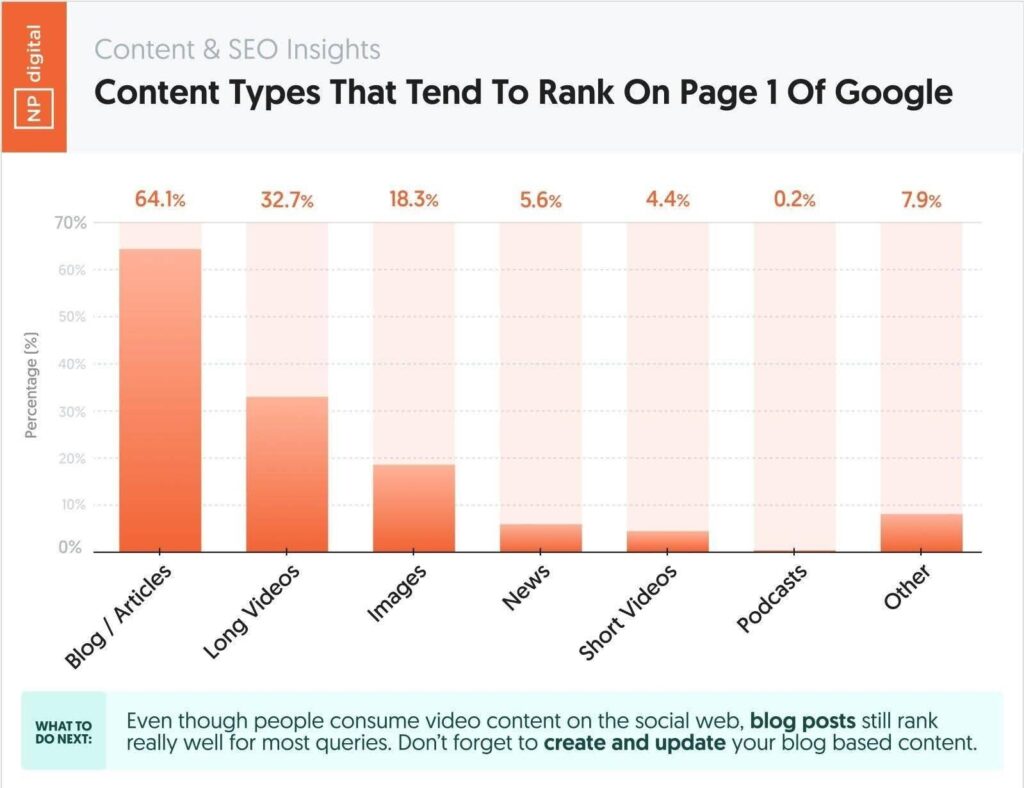
(Source: Neil Patel)
Videos come in second, with long-form educational clips earning more engagement than short, flashy ones. Why is that? Because Google’s algorithm mirrors human behavior.
People want answers, not ads.
Parents searching online want to understand how to help their children. And the practices that provide those answers earn their clicks, attention, and trust.
In other words: the more valuable the content you create, the more discoverable your practice becomes. It’s that simple. And to do that, you simply need to understand the purpose of content marketing.
The Purpose of Content Marketing Is Education and Thought Leadership
Every article, video, or email you publish is another opportunity to educate your community. When you do that, parents start recognizing your name, remembering your advice, and trusting your expertise.
At Uplift, we call this wearing your “educator hat.” As an expert in your field, educating your public is as much your responsibility as providing treatment. When parents see that you’re the local expert who explains their concerns in plain English, they follow you. They share your posts. They forward your emails. And when it’s time to book therapy, you’re already the one they trust.
That’s thought leadership, the art of leading through knowledge, not ads. And that’s what makes your practice stand out in a sea of providers all begging for parents’ attention.
Education Starts with Identifying Your Target Audience
Before you can create good content, you have to figure out who your target audience actually is. The answer may seem obvious: parents. It’s parents who call, schedule evaluations, and bring their children to your clinic.
So, shouldn’t your content educate them on important topics like these?
- Primitive reflex integration
- Bilateral coordination and crossing midline
- Sensory modulation and vestibular-proprioceptive integration
The short answer is, probably not. Maybe these topics are important, maybe you even find them super interesting. But if you use those big terms or focus on niche topics, parents are never going to see it!
What Do Parents Want to See, Then?
No parent has ever been dealing with a meltdown and thought, “You know, I wonder if my child is so dysregulated because they struggle with sensory processing? Let me Google that.”
They’re getting on Google exhausted, overwhelmed, and desperately searching for things like:
- Why does my kid lose their mind over wearing socks?
- Is it normal for my kid to only eat chicken nuggets?
- 4-year-old meltdown every time I vacuum, what do I do?
You know that their child is experiencing developmental delays or other challenges which pediatric therapy can address. But the parents searching for answers barely know what day of the week it is.
If You Want to Reach People, You Have to Speak Their Language
Most pediatric practice owners are overflowing with clinical knowledge, but very few know how to translate that into simple and useful information parents can understand.
What feels obvious to you is too technical for parents. They can’t Google something they’ve never heard of before. And if they can’t understand you, why should they trust you?
The key point to remember is this: you’re not creating content to impress other therapists.
You’re creating content to help parents. Your content should make parents say, “Wow. That’s EXACTLY what I’m experiencing. This sounds like what I need!”
The 4 Best Types of Content for Pediatric Practices
Now that you know the purpose of content marketing and how you can use it to reach people, it’s time to start creating your content! And the good news is that you don’t need a massive production team or Hollywood-quality videos. You just need to be authentic and provide valuable information.
There are four main types of content you can use to educate your target audience:
1. Blog Articles
These are your bread and butter. Your blog is where you take the questions parents ask you in the clinic every week and turn them into helpful, searchable education that lives online forever.
Think of your blog as a digital conversation between you and a parent who’s up late, worried, and searching for help. A strong blog post doesn’t lecture or use technical jargon. It simply answers a real‑world question in plain English.
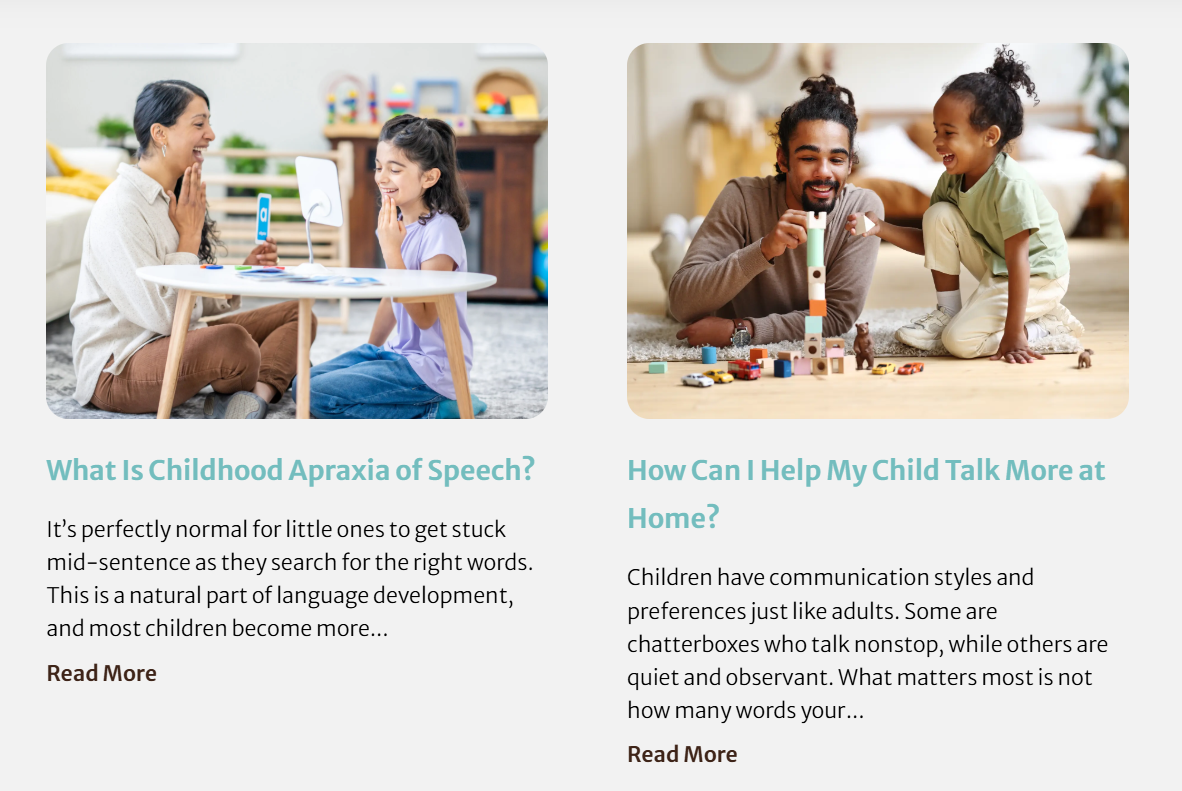
(Source: Gigi’s Kids Speech and Language Therapy)
Post at least one or two blog articles per month and share them on your social media profiles to build trust and position your clinic as the place that understands parents and gives real, actionable help.
2. Video Content (Vlogs, Shorts, Webinars)
Video is the fastest path to connection because it lets parents see your face, hear your tone, and instantly feel connected to you. Even a 60-second video explaining a simple tip creates instant rapport and lowers the emotional barrier to booking therapy. If a parent has never met you, a video can make them feel like they already have.
You don’t need fancy lighting or an expensive setup. Short clips filmed on a smartphone perform incredibly well because they feel authentic and real. Longer videos can be repurposed into a blog or cut into clips you can post on social media, which makes video the most efficient content format.
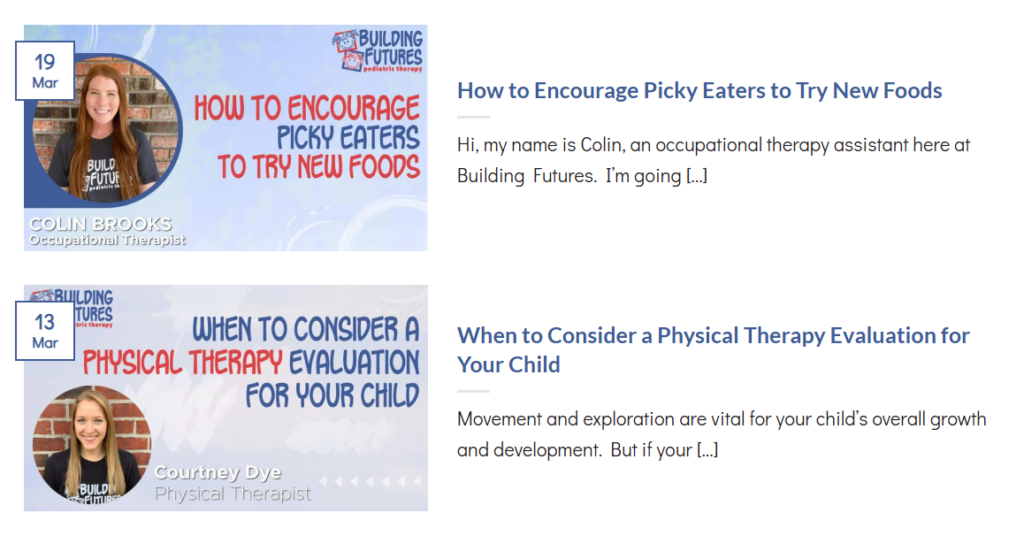
(Source: Building Futures Pediatric Therapy)
Examples of Video Types You Can Create
Here are some simple, high-value video formats pediatric practices can make (no studio required):
- Quick parent Q&A shorts (30–60 seconds): Answer a common parent question in plain English. (Example: “Why does my child avoid messy play?”)
- Longer educational videos (3–6 minutes): Explain a concept or give in depth advice. (Example: “3 easy ways to encourage your child to try new foods.”)
- How-to or demo videos: Show an activity parents can do at home to help with a specific challenge. (Example: “Games to build handwriting and grasping skills.”)
- Behind-the-scenes / clinic tour: Help parents see what your clinic looks and feels like before they book, or show “a day in the life” of a pediatric therapist.
- Success stories or progress highlights: Share HIPAA-compliant stories (or general examples) of wins you see in therapy.
Email Newsletters
Your mailing list is your most valuable marketing asset because it contains the names and contact information of people who already know you, trust you, and have done business with you. Those people are exponentially more likely to return, refer, or say yes to new services than someone who has never interacted with your practice.
A newsletter is how you stay connected to them in a way that feels helpful—not salesy. A great newsletter gives parents practical guidance, a quick tip, or even a success story that makes them feel hopeful. The most successful newsletters are short and skimmable. Feature your latest blog or vlog, include one helpful therapy tip, and keep the call to action simple (e.g., give us a call, forward to a friend, check out our blog for more tips).
The purpose of the newsletter is not to get an immediate response. It’s to stay in front of the parent consistently so that when they do need therapy (or when their friend does), you are the first clinic they think of.
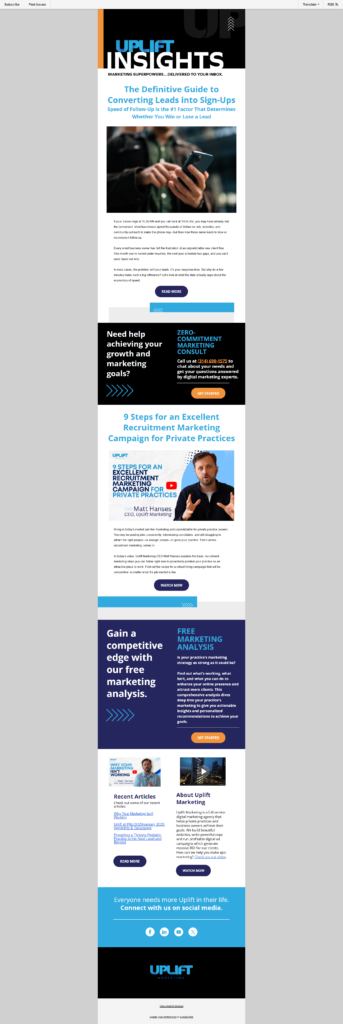
Hard-Copy or Quarterly Publications
Believe it or not, old-school still works. A printed quarterly newsletter shows up in a way that digital content can’t. It lands on the counter, lives on the fridge, and reminds families that your clinic is a real part of their community. They can be expensive, but are especially great for referral sources. Why? Because they’re a physical reminder that you exist and are active.
Even sending a printed mailing just twice a year makes a difference. Practices who use hard-copy publications often see increases in referrals from community partners because physical mail stands out in a world dominated by digital noise.
The magic happens when print and digital work together. Mention your latest blog, link to a video (via QR code), or encourage them to join your email list. Print gets their attention, while digital makes it easy for them to take action.
Why You Need So Much Content (Even If It Doesn’t “Sell” Anything Yet)
Here’s a question we hear all the time: “If content isn’t supposed to sell, and we’re not writing blogs to get new patients immediately, then why do we have to post so often?”
The answer is, because every piece of content you publish is another door into your practice.
Publishing content is important for search engine optimization (SEO), which is simply Google deciding who shows up first when parents type in questions. And Google doesn’t rank you based on how fun your clinic is—it ranks you based on how much helpful content you have.
Google rewards practices that consistently publish valuable, educational information. When your site answers real parent questions (instead of using technical jargon), Google sees you as the expert and moves you higher up in search results. Every time you add a blog, video, or resource to your site, you expand your digital footprint. That means:
- More ways for parents to find you online
- More opportunities for Google to recommend you
- More chances for a parent to say, “This is exactly what I was looking for.”
The Economics of New Patient Acquisition vs. Retention
Here’s another key datum to keep in mind: you don’t create content just to post something. You create content to stay in front of the families who already know you and who are most likely to come back.
It costs 5–7 times more to acquire a brand-new patient than it does to retain or reactivate someone who already trusts you. Yet most clinics spend the majority of their marketing budget chasing strangers instead of staying connected to the families who already said yes.
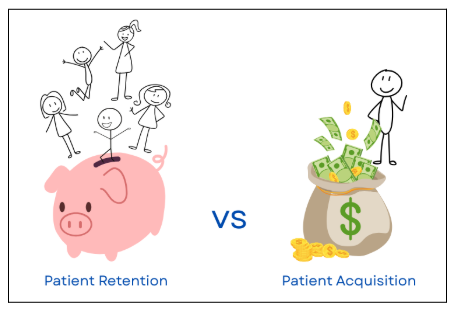
This is where content becomes powerful. Database marketing (using your email list and blog content to communicate regularly) is the simplest, most affordable way to stay connected to your community. The more consistently you communicate, the more you stay top of mind—and the more opportunities you create for growth.
That one reminder might reactivate an old patient, spark a referral, or prompt a parent to book an evaluation for a second child.
If you throw money at ads, you might get one lead today. But a consistent content marketing system keeps paying you back for years.
Try This Simple and Sustainable 3-Step Content Marketing Plan
We all strive for perfection, but when it comes to content marketing, consistency is much more important. Here’s a simple 3-month content marketing system that any clinic can start using right away:
- Brainstorm. Pick 6 key topics parents care about
- Create. Each month, pick two of your chosen topics and create a blog or vlog about it. Keep it practical, simple, and helpful.
- Share. Every time you post a blog or vlog to your website, let people know!
- Email it to your client list as a newsletter
- Post a link on your Facebook or Instagram
- If it’s a vlog, upload it to your practice’s YouTube channel
Most Practice Owners Give Up on Content Marketing Too Soon
Here’s the uncomfortable truth: most practices don’t stick with content marketing long enough to see the results. They post a few blogs, record a couple of videos, or put something on social media. Then they look at the views and go: “No one’s engaging with this. It’s not worth it.”
And they stop.
If you ever feel that way, you have to remember that content marketing is not about short-term engagement. It’s about long-term discoverability. Every blog you publish, every video you record, every post on social media continues working for you forever. An article with 10 views today might have 10,000 views by next year.
Your goal is to build a library of helpful information so that when people need you—and they will—your content is already there waiting for them.
What to Do If Your Content Marketing Doesn’t Seem to Be Working
If you’re not seeing any engagement, don’t assume content marketing “doesn’t work.” It’s more likely that you haven’t hit on the topics that parents in your area are most concerned about. Your content just isn’t speaking the right language.
Instead of giving up, look over your content and ask yourself:
- Is this written in plain English and easy to understand?
- Does this answer a question you’ve actually heard from parents?
- Did you offer actionable, practical advice? (Things parents can actually do that will help them right now?)
- Does it sound like advice from a friend, or an ad for your clinic?
All you have to do is put yourself in the shoes of worried, overwhelmed parents. What problems are they facing? What help can you give them? If you’re a parent yourself, what did you wish you knew when your kids were younger? Then ask: does your content provide that for them?
If the answer is yes, keep doing it! If the answer is no, see what you need to change to make the answer a yes, and then do that.
Four Common Mistakes That Undermine Your Content Marketing
Even the best intentions can fall flat without consistency. Here are four traps to avoid:
1. Publishing too infrequently or irregularly.
Google prefers more recent content when choosing what to display in search results. The more recent your blog posts are, the higher chance you have of showing up on page 1 of parents’ search results.
Pro tip: did you know you can simply go back through some of your older blog posts, update them by adding more useful content? A study from databox found that updating old blog posts can lead to a 61-80% increase in organic traffic to your website.
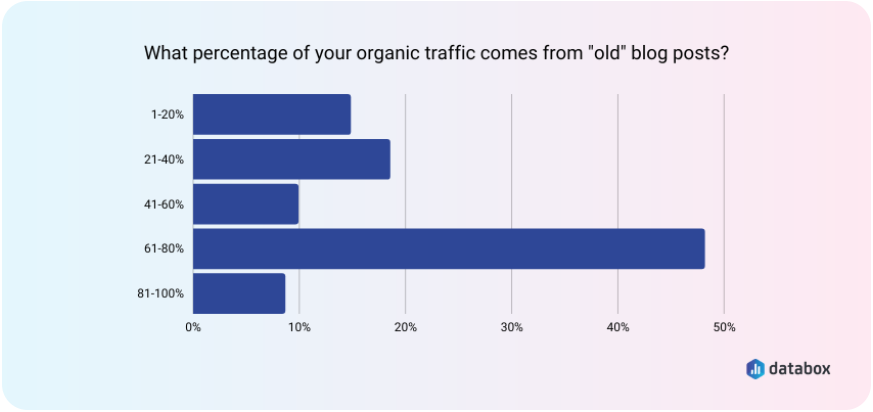
(Source: databox.com)
2. Writing (or vlogging) about what you care about instead of what parents search for.
According to data gathered by Forbes in 2024, audience research is the leading factor that contributes to the success of content marketing campaigns. Simply put, you have to know what your audience is looking for and provide it.
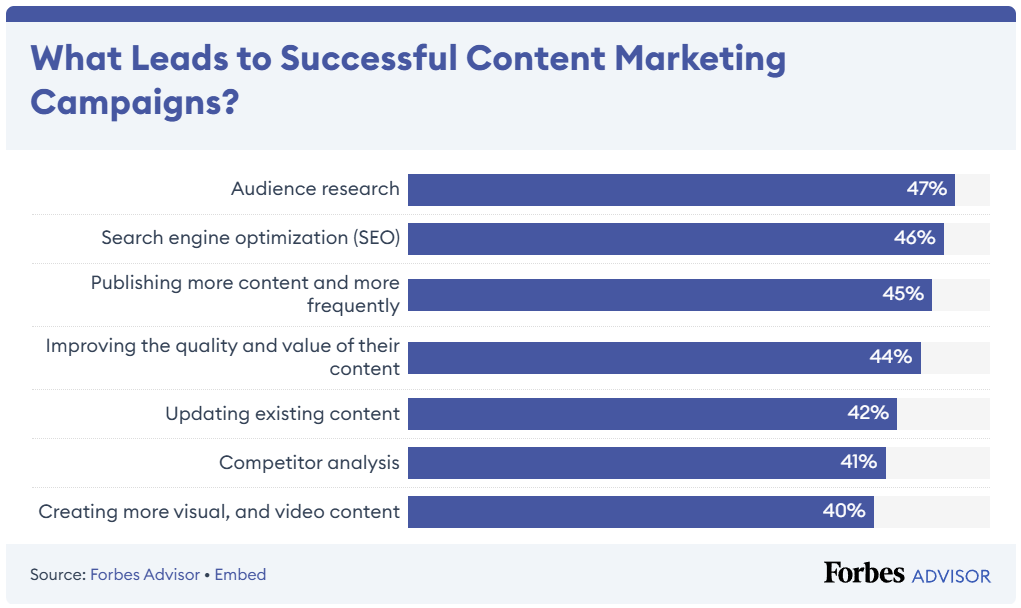
(Source: Forbes Advisor)
3. Never promoting your content (no emails, no social shares, no ads).
Yes, we want parents to be able to find your blog posts organically (by searching questions online and finding your blog with the answers). But that doesn’t mean you shouldn’t promote your blog to your list!
Content that never gets seen doesn’t help anyone. Posting a blog on your website without emailing it or sharing it on social media is like printing brochures and leaving them in a box in your supply closet.
4. Expecting overnight success.
Creating a successful blog is a marathon, not a sprint. According to research from Databox, over 55% of marketing experts surveyed agreed that a new blog will take about 3-9 months to start gaining traction online.

Final Thoughts on Your Role as an Educator and Leader
Every healthcare professional has an ethical responsibility to educate their public. For a pediatric therapy practice owner, that means teaching parents, teachers, and even pediatricians what signs to look for and what therapies can help.
Think of it this way: education bridges the gap between ignorance and action. Without it, many families delay care for months—or even years—because they simply don’t know what’s normal and what’s not.
When you consistently publish educational content, you become the trusted voice that guides and encourages. You take the value you already provide to your clients every day through the quality of your care, and you share it with the broader community. This builds trust, it improves your image, and it gets people thinking about you.
If you do it right, then when they do need help, they’ll know exactly who to call.
Need Expert Help with Content Marketing?
If you want to start content marketing the right way, but you don’t have the time to figure out what to do from scratch, Uplift Marketing can guide you through the process step by step.
We specialize in pediatric private practices. You bring the expertise, we help you zero in on the right topics and support you in creating valuable content that positions you as the trusted expert in your community. From there, we take the lead and make sure your content gets published, shared, and seen.
Whether you need a full content marketing system or just want guidance on where to start, we’re here to help. Give us a call at (314) 690-1575 or use our Contact Us webpage to reach out.
