

Every small business owner has, at one point or another, been frustrated by spending thousands of dollars on ads, job postings, websites, and SEO to make the phone ring. Yet the return never seems to match the investment.
Sure, you get leads. But they don’t convert the way you expect them to. Maybe you wonder why you’re not getting new hires, or why leads fill out contact forms and never become new clients. Why did you invest all this money but you’re still not seeing results? Why doesn’t your marketing “work”?
What most business owners don’t realize is that your leads aren’t failing for the reasons you think. There’s a hidden factor that silently determines whether you win or lose nearly every lead that comes your way.
And once you understand it, everything about your marketing ROI will start to make sense. So what it is? Let’s take a closer look at what the data shows.
The #1 Factor That Determines Whether You Win or Lose a Lead
A lead isn’t just a person asking questions. It’s a potential new hire, or a new client, and a return on your marketing investment. But the most decisive factor in whether that lead converts isn’t your reputation, what forms of payment you accept, or even your online reviews.
It’s how fast you respond.
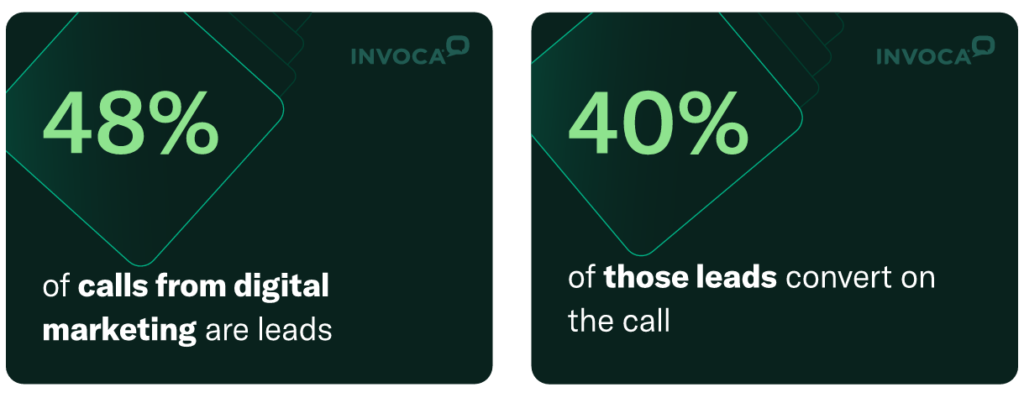
- 48% of calls from digital marketing are leads.
- 40% of those leads will convert during the call.
- Leads are 10 times less likely to respond after 5 minutes.
- Responding in the first minute increases lead conversions by 391%.
If you’ve ever wondered why your marketing isn’t producing the growth you expected, start here. Every minute a message sits unanswered, the odds of conversion plummet.
(Source: Invoca)
Now, you may be thinking, “That’s impossible. We’re so busy, surely people understand that we try to get back to them as soon as we can.” And that may be true, but it doesn’t change the fact that clients and jobseekers are quick to move on when they don’t hear back. If you understand why, then you can get a leg up on your competitors.
The Hidden Lead Drop-Off Point
People don’t reach out to a business casually. By the time someone calls, fills out a form, applies for a job, or sends a message, they’re already in decision-making mode. They’re trying to solve a problem right now:
- A parent is trying to get help for their child.
- A homeowner is trying to book a service before work.
- A patient is comparing clinics.
- A job applicant is deciding where to interview.
- A customer is choosing who to trust with their money.
Nobody wants to wait. When people are searching for answers, they’re often overwhelmed, under time pressure, and trying to cross something off their list. And in that moment, they are not loyal to you. They are loyal to whoever helps them first.
A study by Google and Ipsos found that 61% of smartphone users call a business when they’re ready to buy. That means your leads have already researched their options, added your business to their list, and are ready to commit. If they reach voicemail, they simply call the next business on their list.
It’s not personal, it’s logical. So, where are businesses losing clients most often? Usually, it comes down to a few repeatable mistakes.
5 Common Mistakes Businesses Make That Lose Leads
Here’s where good businesses go wrong with lead follow-up:
- Returning calls at the end of the day. By then, your competitor has already booked them.
- Letting weekend messages sit until Monday. Leads don’t pause just because your office is closed. Parents don’t wait until office hours to make important decisions for their children. Homeowners shop for services on Saturdays. Job seekers apply at 11 PM on Friday night. If you wait until Monday afternoon, the lead is gone.
- Not assigning ownership. Lead follow-up cannot be a “whoever’s free” job. It requires a dedicated point of contact whose sole responsibility is speed.
- Assuming leaving a voicemail counts as contact. It doesn’t, especially if the lead never checks it. If you didn’t speak to a real human being, the lead is still open.
- Not measuring the effectiveness of your follow-up. You can’t improve what you don’t track!
Every unanswered inquiry is a patient who doesn’t receive the care they were looking for, a customer that chooses your competitor, or a jobseeker who now works for the business down the street instead of you.
The good news? Every one of these mistakes can be fixed with a simple, structured follow-up system.
Why You Should Build a Lead-Follow-Up System
Speed shouldn’t depend on having a “good day” at the front desk. It should be built into your business as a standard operating procedure.
A consistent follow-up structure eliminates guesswork and ensures no lead falls through the cracks. Here’s how to set one up:
- Capture every inquiry. Whether it comes from a call, form, or message, log it in one place (your EMR, a spreadsheet, or your CRM).
- Set clear response-time targets. Live answer for phone calls; under five minutes for online forms and emails.
- Assign ownership. One person (not “whoever’s free”) is responsible for new leads. It’s their job, their baby, and their metric to track.
- Automate alerts. Use text or email notifications for incoming forms or missed calls so you can answer as quickly as possible.
- Document outcomes. Mark every lead as contacted, scheduled, or pending follow-up. The goal here isn’t to add more time for paperwork, but to make sure none of your leads fall through the cracks.
- Review weekly. Track how fast responses happen and where delays occur. Even a simple Google Sheet can be enough.
The key is accountability. Everyone on your team should know who’s responsible for new inquiries and what the timing expectation is. But knowing what to do is only half the battle. How you do it is also important, and that depends on the type of lead you’re handling.
Types of Leads and How to Handle Each
Different inquiries require different tactics, but the common denominator is speed. When every type of lead is handled this way, you’ll start to see why being first to respond is a winning strategy. Here are some tips for handling different types of leads:
Phone Calls
These are your highest-intent leads. Invoca’s 2025 benchmark found that 40% of leads convert during the call itself. If no one answers, that opportunity is gone.
Tips:
- Always answer live during business hours.
- Return missed calls within minutes, not hours.
- Use a simple callback script: “Hi, this is [Business Name]. We just saw we missed your call and wanted to find out how we can help you.”
Web Forms
These leads have taken the time to fill out your form, and they often expect instant acknowledgment. Every passing minute between their submission and your reply gives them time to look at other business’ websites and fill out their forms.
Tips:
- Auto-confirm their submission with a short, friendly message.
- Then follow up personally within five minutes by phone or text.
- Example: “Thanks for reaching out! We’ll give you a quick call now to help you get started.”
Emails
Email may feel less urgent than a call or text; but in your lead system, it should be treated just like phone leads. The faster you respond, the more likely that customer, patient, or jobseeker is still in decision mode and ready to choose you.
Tips:
- Follow up with a call to get them on the phone ASAP.
- If they don’t answer, respond via email. Keep replies short, warm, and actionable: “Thanks for reaching out! When is a good time to call to help you get started?”
- You can even set up email autoresponders to help get these leads on the phone and converted to new clients.
Social Media Messages
Clients often reach out through Facebook or Instagram. These messages might come in at odd hours, like while they’re scrolling after bedtime or during a quick work break. They’re usually the most casual leads, but a warm message sent within minutes can turn a casual question into a close.
Tips:
- Set up instant auto-replies that acknowledge off-hours messages (for example: “Thanks for reaching out! We’ll get back to you first thing tomorrow morning.”)
- Follow up as soon as office hours resume.
- Respond conversationally: “We’d love to help! Can I call to get a few details?”
Job Applicants
Applicants for in-demand positions are high-value leads—and they disappear even faster than customers. Great candidates often apply to multiple employers within the same day, and the company that responds first usually books the interview. Slow follow-up doesn’t just cost you the hire; it forces you to settle for whoever’s left. In a tight labor market, speed is everything.
Tips:
- Contact applicants the same day, ideally within an hour. A quick call or text like, “Hi, this is [Business]. We saw your application and would love to set up a time to chat,” instantly positions you as the responsive employer.
- Offer interview times immediately. Don’t wait for extended back-and-forth. Give them 2–3 options right away and secure the meeting while momentum is high.
- Make the interaction warm and human. Candidates are choosing you, not just the job. A friendly tone (“We’re excited to meet you!”) can be the difference between closing and fumbling the lead.
Why the First Responder Almost Always Wins
Studies show that about 78% of customers buy from the business that responds to them first. That’s not because the first responder is better or even cheaper. It’s because the customer stops shopping once someone gives them the help they’re looking for. (Or, in hiring, because the jobseeker stops seeking once they land a job.)
Responsiveness communicates to people that you’re reliable. It says, “We’re right here, we care about you.” In contrast, a slow response (no matter how polite) implies that you’re busy or even disinterested.
Two businesses can have the same services at the same quality and the same price. If the only difference between them is that one called back first, that’s the one that will get the conversion. That said, even the fastest system won’t work without the right person running it.
The Real Game-Changer in Lead Conversion
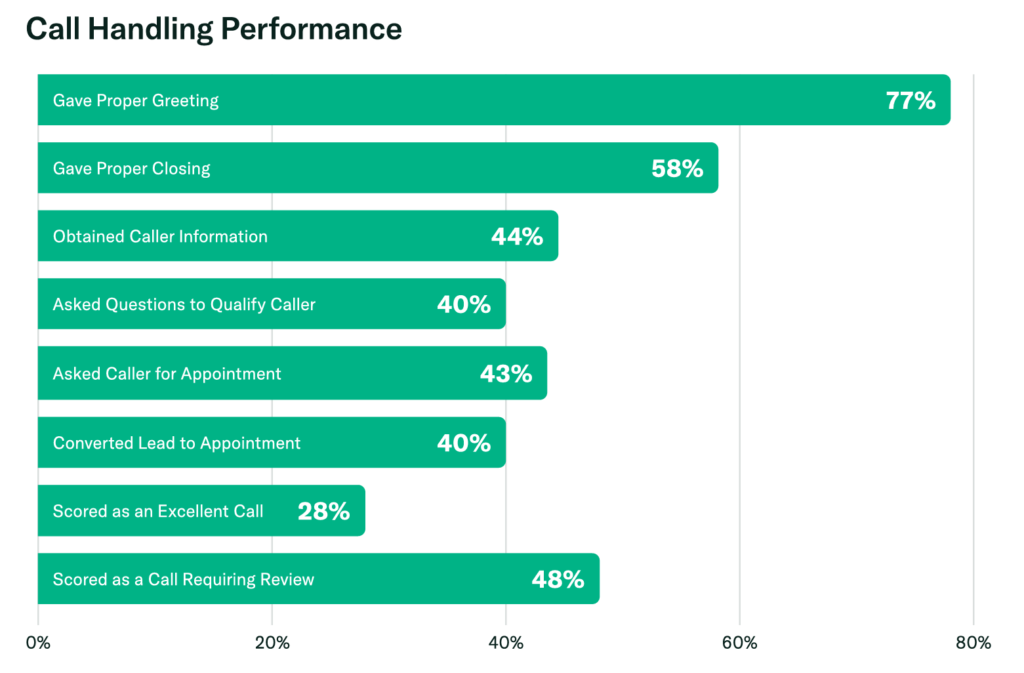
The Invoca Call Conversion Benchmarks Report for 2025 analyzed over 60 million phone calls in 2025. And what they found shows that the quality of your staff’s phone handling skills matters almost as much as their speed in answering.
In fact, according to that report, 66% of clients will stop doing business with you after just one bad experience. And from their analysis, only 28% of calls scored as “Excellent,” based on the call-handling skills of the staff.
(Source: Invoca Call Conversion Benchmarks Report for the Healthcare Industry, 2025)
Fast responses get leads’ attention, but what do you do once you’ve got them on the phone? A disinterested or rushed response can still lose the close. Once you nail the speed of your responses, it’s time to make sure your front desk understands the vital importance of their hat.
5 Qualities Your Lead Follow-Up Employees Must Have
You can build a flawless system, but it won’t work without the right person running it. Lead follow-up isn’t administrative—it’s sales. And if your front desk doesn’t know that, they’re not going to close anyone to schedule an evaluation.
Here are the five most important qualities your lead follow-up employees must have to excel at their job:
- Enjoys Interacting with People: They like connecting with people by phone, text, or email.
- Good Communication Skills: They can explain next steps clearly and warmly, as well as understand the questions that clients ask.
- Persistence: They keep following up until they reach someone.
- Resilience: They bounce back quickly after rejection or no-shows.
- Well-Organized: They log every lead, note every contact attempt, and make sure nothing slips through.
How Business Owners Should Manage Follow-Up
Fast follow-up doesn’t happen by accident. It happens because the owner sets up a system that makes speed inevitable. Whether you’re trying to convert customers, patients, clients, or job applicants, the single biggest determinant of success is how well your follow-up is managed. Here’s how to build a system that never lets a lead slip through the cracks.
Track the Source of Every Lead (Electronically, Not on Paper)
If you don’t know where your leads come from, you’re guessing—not managing. Every business owner should have call tracking, form tracking, and UTM codes set up so you can answer the most important questions in marketing and recruiting:
- Where did this lead come from?
- Which marketing dollars produced it?
- How much revenue did that lead generate?
- Which channels are wasting money?
When you don’t track this data, you can’t decide what to scale, what to cut, or what to fix. Decisions must be made based on statistics. And you can’t pull statistics out of thin air. Without tracking, your ROI is a mystery.
Use a CRM or Spreadsheet That Actually Gets Updated
A system is only as good as the data in it. Your CRM (or even a simple spreadsheet) must show:
- Every new lead
- Where they came from
- Who followed up
- When contact was made
- Whether they booked, bought, applied, or declined
- What the final outcome was
Most businesses lose leads simply because no one is keeping meticulous records. The business thinks leads are being followed up on, but the numbers say otherwise. Accurate tracking is vital if you want to convert leads.
Assign One Person as the Lead Coordinator
This is one of the biggest changes that instantly improves conversions. Every business (therapy practice, contractor, dentist, retail shop, moving company, recruiter) needs one person whose sole job is ensuring that every lead is:
- Answered quickly
- Handled correctly
- Routed to the right person
- Followed up until completion
When follow-up is “everyone’s job,” it becomes no one’s job. This person is not your salesperson or your clinician or your hiring manager. Even if they have two duties, when they are being the “Lead Coordinator,” their only product is fully handled leads.
Create Scripts, Procedures, and Train Until It’s Flawless
Businesses don’t fail at lead conversion not because your staff doesn’t care, but because they are untrained. A Lead Coordinator must have:
- Written scripts
- A documented policy for every type of lead
- Expectations for response times
- A clear sequence of actions
- Role-played practice until they can perform cold
When your staff knows exactly what to say, leads convert at dramatically higher rates. Scripts, standards, and exact procedures are necessary to elevate call handling from “answering the phone” to converting leads.
Review Call Handling and Conversion Stats Monthly
An owner cannot set up a system and then ignore it. Every month, senior management should:
- Review call-answering stats
- Review conversion stats
- See how many leads were lost
- Determine where follow-up broke down
- Assign corrective action
This step is critical because it will reveal exactly how many calls were answered, routed and converted. This can help improve your ROI dramatically because you’ll be able to make data-driven decisions, not guesses.
Personally Listen to Sample Call Recordings
This is one of the most eye-opening—and profitable—things a business owner can do. Listening to even five calls per month will instantly show:
- Where leads are being mishandled
- Where staff sound uncertain
- Where scripts are not being followed
- Where opportunities are missed
- Where training is needed
When owners skip this step, poor call handling often goes unnoticed for years. When owners do this step, improvement is immediate and dramatic. Nothing replaces hearing the reality of how your business is speaking to the public.
Putting It All Together
A fast follow-up system isn’t luck. It’s built into the foundation of your business. When you track every lead, assign clear ownership, script the process, and inspect performance regularly, two things happen:
- Your conversion rate climbs, and fast
- Your marketing becomes dramatically more profitable
And this applies to everything: new customers, new patients, new clients, and new hires.
If you manage follow-up with the same precision you bring to your services, you will outperform competitors who rely on “having a good day of calls.”
Make Speed Your Competitive Advantage
The first five minutes after a lead contacts your business decide whether your marketing dollars pay off or vanish into the void. That might sound dramatic, but when you see how fast customers and jobseekers make decisions, it’s really not.
Take a look at your current process this week. How long does it really take your team to respond? Who owns the follow-up? What happens when a lead messages you on a Saturday? The answers will show you exactly where your leads are slipping away—and how fast you can fix it.
And if you need help to fix it, reach out to Uplift Marketing. We help businesses design lead-handling systems that turn inquiries into closes. Contact us at (314) 690-1575 to get started today.
