
Every pediatric practice owner wants more visibility. But “visibility” doesn’t just mean more patients finding you. It also means more clinicians discovering your practice, more parents recommending you to their friends and family, and more people seeing you as a trustworthy place to work or receive treatment.
Most practices aren’t struggling because they lack demand or interest. They’re struggling because their online presence isn’t doing the heavy lifting it should. When you realize that fewer than 1% of people click on the second page of Google search results, you’ll understand that a weak online presence directly impacts your growth.
And the gap between practices that understand this and practices that don’t is getting wider every single year.
So why do some clinics stay stuck while others scale easily? How do you build the kind of online presence that does the heavy lifting for you and creates the momentum your practice needs to actually move forward? That’s what we’re going to cover in this article.
When We Say “Online Presence,” We’re Really Talking About Two Key Elements of Marketing
When we talk about your “online presence,” we’re really talking about two core systems that determine how visible, credible, and attractive your practice looks from the outside: search engine optimization (SEO) and content marketing.
Many owners think SEO is simply about “ranking” or “keywords” and that content marketing means posting occasional blogs. In reality, SEO is the process of strengthening your website, content, and overall digital presence so your business can be found more easily in search results. And content is what convinces them to take the next step.
These are the engines behind your digital footprint. They influence how easily people can find you and how confident they feel about you once they do. Without understanding these two pieces, it’s almost impossible to understand why some practices stand out instantly while others stay invisible.
If You Have a Visibility Problem, What You Really Have Is an SEO Problem
Most owners think they have a demand problem or a hiring problem, but in reality, what they have is a visibility and credibility problem. When your expertise isn’t clearly represented online, both families and therapists tend to overlook you without a second thought.
It takes only 50 milliseconds for users to form an opinion about your website. If people land on your website and don’t immediately understand who you are or why they should trust you (i.e., your content isn’t great), they move on. And if no one ever lands on your website in the first place (i.e., your SEO isn’t great), the best content in the world won’t matter.
What SEO Actually Is (In Plain English)
SEO is simply the system that determines whether people can find you when they need you. It’s how clearly your practice shows up when someone searches for help—whether that’s a parent worried about a delay or a therapist quietly researching where they might want to work next.
Think of SEO the same way you think about filing systems inside your clinic. If every evaluation, progress note, and plan of care were tossed into a single pile with no structure, important information would get lost. Search engines work the same way.
If your website isn’t organized in a way Google can understand, it doesn’t know where to “file” you. And if it can’t file you, it can’t show you to the people searching for what you do.
What Content Marketing Actually Is
Content is what shows people who you are once they’ve found you. It’s how you demonstrate your expertise, share your philosophy, and help people understand what you’re all about.
Parents use your content to decide whether they trust you with their child. Clinicians use it to decide whether they trust you as a leader.
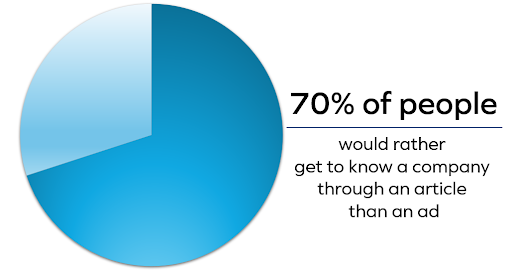
Strong content answers questions before people have to ask them. It removes uncertainty and communicates confidence. In fact, research shows that 70% of people would rather learn about a company from an article than from an advertisement.
If your website only includes a handful of basic pages, you’re missing the biggest opportunity to build trust with clients and job candidates long before they ever reach out. Good content builds trust across the board.
SEO Is Changing Fast (And Most Advice Online Is Already Outdated)
Before we get too deep into tactics, it’s important to understand the landscape you’re competing in. Search is going through one of the biggest shifts it’s seen in more than a decade.
Google isn’t just listing websites anymore—it’s trying to interpret information, summarize it, and deliver answers instantly through AI Overviews. These summaries appear in 88% of informational search queries, and that number is likely to grow.
That means your practice is no longer just competing with other clinics. You’re competing with whatever Google decides is the most trustworthy, authoritative, and complete source of information on a topic. And if you’re not one of them, you’re invisible in the places parents and clinicians now look first.
The Hidden Cost of Not Keeping Up with Search Behavior
This shift is catching a lot of practice owners off guard. They think of SEO as something static—something you set up once and forget. But the rise of AI has changed search behavior, and the bar for what counts as “trustworthy” has gone up. Therapists researching employers and parents researching help for their child are both relying on search more than ever.
In fact, there are about 6 million searches done on Google every minute. And estimates show that about 46% of Google searches have local intent, meaning users are searching for things local to them.

(Source: Local Falcon)
For pediatric practices, good SEO isn’t a “nice to have.” Search visibility affects referrals and recruitment in equal measure. If your practice doesn’t show up as credible, trustworthy, and active online, people move on.
What Hasn’t Changed with SEO (And Won’t Anytime Soon)
Here’s the good news: while the surface-level mechanics are evolving quickly, the fundamentals haven’t changed at all. The practices that win are the ones that:
- Publish meaningful, helpful content
- Share their expertise generously
- Communicate clearly and consistently
Google can only work with what exists because AI can only pull from what’s already published. If your practice isn’t putting enough substance online, you’re simply not going to show up.
Why SEO and Content Marketing Only Work When They Work Together
SEO without content is an empty shell, and content without SEO is invisible. You need both if you want to improve your online visibility and attract clients and clinicians to your practice.
Here’s how they work together across both audiences.
1. SEO Gets Eyes on Your Content
SEO determines whether people even discover your practice in the first place. But showing up in search results isn’t enough—you also have to earn their confidence once they click. That’s where content does the heavy lifting.
When someone arrives on your website, they’re looking for clarity and direction. Strong content shows them they’re in the right place. It demonstrates that you understand their situation and have something meaningful to offer.
Put simply: SEO gets you the attention. Content directs action.
2. Search Engines Love Authority, and Content Delivers It
Google’s goal is to connect users with trustworthy, high-quality information. It’s not enough for your practice to exist online; Google needs evidence that you’re a legitimate, experienced, and reliable source.
That evidence comes from your content—your explanations, your insights, your ability to communicate complex ideas simply. A practice that regularly shares helpful information looks very different from one that barely updates its website.
When you routinely publish high-quality content with substance, Google can tell you’re a real authority on the topic.
3. Content Creates a Better Experience, and Better Experiences Get Rewarded
People stay longer on websites that teach them something, answer their questions, or help them make better decisions. They don’t stay on websites that feel vague, thin, or generic.
One study found that 71% of patients will look for another provider if a website doesn’t give them enough information, which means poor content doesn’t just hurt SEO—it drives people away.
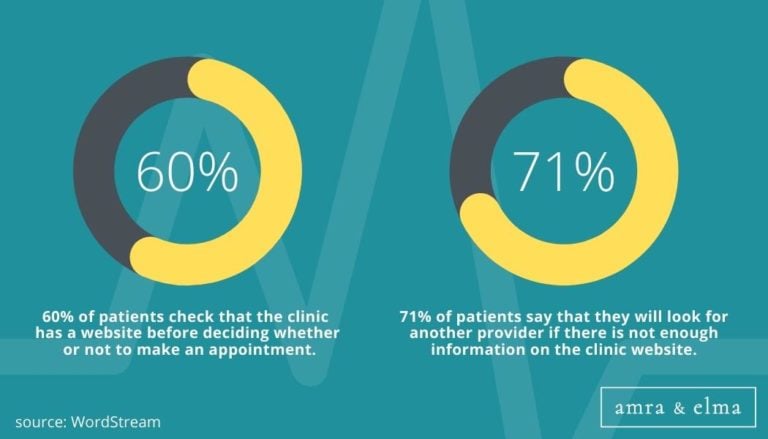
(Source: Amra & Elma)
Search engines notice the difference.
A clear, well-organized, content-rich site sends a strong signal: this practice is helpful. And the more helpful your site is, the more Google trusts it and recommends it in search results. That means higher visibility, more clicks, and more people who understand your value before they ever reach out.
4. SEO and Content Together Make You Visible in Places You Don’t Control
Search is no longer just a list of websites but a network of touchpoints where people form opinions about your practice long before they ever visit your site. Google Search, Maps, AI summaries, social media, parent groups, review websites—none of these channels belong to you, but they all influence how people see you.
SEO helps you appear in those places. And your content gives people a reason to pay attention once you do.
The More Quality Content You Create, the Stronger Your SEO Becomes
One of the biggest misunderstandings in marketing is the idea that you need to “know SEO” to benefit from it. In reality, most practices improve their SEO simply by publishing high-quality, helpful content.
Here’s why: every time you answer a real question—whether it’s about developmental milestones, evaluation processes, or your clinical philosophy—you naturally include the exact language people are typing into Google:
- Here’s how occupational therapy helps kids with autism
- This is why some kids are picky eaters and how to help
- Here are tips to help your child build speech skills
You don’t have to chase keywords. You don’t have to guess what to write. If you’re being useful and specific, you’re already doing the most important part of SEO.
The Bottom Line: In 2026 and Beyond, You Cannot Rely on Old SEO Tactics
Most practice owners were never told what SEO actually is. And that misunderstanding is what holds them back because it isn’t an annual website tune-up or some mystical coding activity that only IT specialists can help you achieve. It’s an ongoing reflection of how clearly you communicate your expertise online.
There are lots of old tactics that simply don’t work anymore because Google no longer rewards shortcuts. For example, you may have heard about “keyword stuffing,” which was rampant not too long ago. This was a type of shortcut to try to rank higher in online search results by stuffing as many keywords into your content as you could.
Google noticed this trick and shut it down years ago. Now, these spammy SEO tactics trigger penalties that reduce your online visibility. And that’s the pattern: every shortcut, every gimmick, every “quick win” eventually gets wiped out because it doesn’t help users. What does work—and keeps working—is showing up online the same way you show up clinically: clear, informed, and genuinely helpful.
That’s why practices that take content seriously rise in visibility and practices that don’t stay stuck.
How Pediatric Practices Should Approach Content Marketing and SEO
Owners don’t need to understand how algorithms work. They just need to take the right actions, consistently.
1. Publish Helpful Content That Reflects Your Expertise
Start by answering the real questions you hear every week. The more useful your content is, the more your clarity shows and the more people understand the value of your work.
Good content is about making your expertise visible.
2. Focus on the Parts of Your Practice You Want to Grow
If you want to grow certain programs or specialties, your content should reflect that focus. The topics you write about teach Google—and your audience—what your practice does well.
3. Keep Your Website Clear, Updated, and Easy to Navigate
People should understand exactly who you are and what you offer within seconds of landing on your website. Clear pages, simple language, and an intuitive layout go further than most owners realize.
4. Strengthen the Signals That Show You’re Active and Trustworthy
Your online presence works better when it looks alive. A regularly updated Google Business Profile, fresh photos, timely blog posts, and a steady flow of reviews all signal that your practice is active, engaged, and paying attention.
5. Treat Content and SEO as a Long-Term Investment
Visibility builds the same way clinical progress does: over time. A handful of posts won’t transform your online presence. A year of consistent, thoughtful communication will. The practices that show up consistently online are the ones that become the most recognized and trusted in their communities.
Uplift Marketing Can Help You Put This into Action
Content and SEO are powerful growth tools, but they can also be overwhelming—especially when you’re running a busy practice. That’s where we come in.
Uplift helps pediatric practices build the kind of online presence that actually moves the needle. We write the content, optimize the strategy, and manage the moving pieces so you can stay focused on caring for kids and leading your team.
If you’re not sure how your website is performing or where the gaps are, we offer a free SEO audit that will show you exactly what’s working, what isn’t, and what your next steps should be. Give us a call at (314) 690-1575 or reach out to us online to get started.
